By Eric Vandenbroeck and co-workers
The Limits Of The China Chip Ban
In 2022, amid rising
U.S.-Chinese tensions, the Biden administration rolled out export controls to prevent
Beijing from obtaining advanced semiconductors and the equipment to produce
them domestically. The stated objective of these restrictions was to deny China
the cutting-edge AI capabilities it could use to modernize its nuclear and
conventional weapons. U.S. Secretary of Commerce Gina Raimondo insisted that
the controls were “laser-focused” on impeding Beijing’s military development.
But these measures may also protect the United States’ technological and
economic edge over China. Although leadership in AI is not officially
stipulated as an aim of the restrictions, U.S. officials, including Raimondo
and U.S. National Security Adviser Jake Sullivan, have regularly asserted that
it is central to the country’s competitive economic advantage, which in turn
advances its national security.
However the chip
controls will probably fall short of achieving either outcome. They are
unlikely to substantially slow Beijing’s military modernization, much of which
can be accomplished using older legacy chips. Where cutting-edge AI chips are
needed, the Chinese military can use previously imported chips, smuggled chips,
and domestically designed and produced chips. The controls will likely be more
consequential when it comes to enabling the United States to maintain its
technological edge. By impeding China’s ability to develop and deploy AI
throughout its economy, the export restrictions could slow China’s growth and
curb its competitiveness, thereby helping the United States stay ahead.
The benefits,
however, will be only temporary and the costs high. There are strong
indications that the controls are expediting China’s indigenous development of
its own semiconductor supply chain. As a result, U.S. actions may impede
Chinese innovation and growth only in the short term, and thereafter actually
speed up its technological advance. Meanwhile, chip equipment companies in the
United States and in allied countries are already seeing declines in revenue as
they are forced to leave the Chinese market, denying them funds to fuel
research and development. China’s semiconductor industry may soon be able to
catch up, potentially leaving the United States and its partners with
diminished leverage over China at the same time as export controls increase
the risks of economic decoupling and geopolitical fracture.
The current U.S.
strategy is flawed. Washington should place less emphasis on slowing down China
and focus more on improving its innovative prowess. Moving forward, the U.S.
government must capitalize on the temporary Chinese slowdown afforded by export
controls to establish a decisive lead in the most important technologies of
tomorrow.
Staying One Step Ahead
China’s semiconductor
industry has made significant progress over the past ten years in AI chip
design, tooling, and advanced fabrication. Two U.S. design companies, Nvidia
and AMD, lead the AI chip market, but Chinese design firms Huawei and Biren
have been making progress. Both companies unveiled advanced chips—Huawei in
2019 and Biren in 2022—with performance specifications similar to those of U.S.
firms. But even if Chinese firms are close behind U.S. market leaders in chip
design, they lag behind in manufacturing advanced-node semiconductors—the lower
nanometer chips that power AI. Currently, the most advanced manufacturing
process developed by China’s leading fabrication company—Semiconductor
Manufacturing International Corporation (SMIC)—is producing chips that are
about five to six years behind the state of the art. Furthermore, SMIC’s best
fabrication facilities still rely heavily on Dutch, Japanese, and U.S.
equipment, as Chinese equipment remains incapable of producing the most
advanced chips.
The U.S. government
wants to protect the country’s advantage, seeking to “maintain as large of a
lead as possible” in technologies that power both military modernization and
economic growth, as Sullivan put it in September 2022. The Biden administration
is committed to ensuring that the United States stays in front on AI, primarily
by preserving its technological edge over the chips crucial for developing AI
systems. Raimondo bluntly summarized the plan in December 2023: “America leads
the world in artificial intelligence. America leads the world in advanced
semiconductor design, period. . . . We’re a couple years ahead of China. No way
are we going to let them catch up.” Hence the export controls.
Washington’s stated
objective is narrow: to block China’s access to chips that the U.S. Bureau of
Industry and Security states can be used to “train frontier AI models that have
the most significant potential for advanced warfare applications.” Yet as Sullivan
has explained, maintaining the United States’ lead in computing hardware and AI
advances its economic competitiveness, not just its military superiority.
Although the Biden administration denies that the export controls are intended
to limit China’s technological or economic development, the restrictions do
offer a potential means of doing just that. Denying China access to the most
advanced chips should limit the computational power available to Chinese firms
and engineers, thereby holding back the country’s ability to develop
sophisticated AI systems and reap their productivity benefits.
The Biden
administration has characterized its policy as a “small yard, high fence”
approach, meaning that stringent restrictions apply only to a limited range of
chips and fabrication tools. In 2022, U.S. regulators banned the export to
China of the most advanced chips, which are used to build AI models, and the
equipment used to make them. After gaps in the restrictions became apparent in
2023, the administration tightened the controls and coordinated the restrictions
with its allies. The regime will likely continue to evolve as Chinese companies
find workarounds and the U.S. government identifies additional shortcomings in
its effort to slow China’s technological advance.

Washington is right
that the country’s national security goes hand in hand with its economic
competitiveness. It is therefore in the interests of the United States to
hinder China’s military modernization, as well as to seek to ensure that U.S.
economic and technological competitiveness remain several steps ahead of
Beijing's. The problem is that the export controls are unlikely to
significantly hamper China’s military modernization and will only temporarily
impair its economic competitiveness.
Where There’s A Will
Washington’s export
controls will do little to arrest China’s military modernization, as most current
weapons systems do not rely on the advanced chips that are subject to the
restrictions. U.S. regulators have even acknowledged as much. Instead, military
systems prioritize reliable, well-tested chips, which are typically fabricated
on older equipment. The processors used in most weapons of war—tanks, missile
systems, and even drones—are not covered by the 2023 controls, meaning that the
restrictions will have a limited effect on these weapons’ capabilities.
Nonetheless, advanced chips do have some military applications; in particular,
they can expedite the design of advanced missile systems and weapons of mass
destruction.
But to the extent
that China’s military does need advanced computing capabilities to develop
weapons and train AI models, it will likely be able to satisfy that demand with
smuggled chips and larger quantities of lower-performing domestic alternatives.
The technology controls that the West imposed on Russia following its invasion
of Ukraine in 2022 have made clear the challenges of preventing evasion.
Despite the unprecedented scope of coordinated sanctions, existing export
controls on Russia have not stopped it from importing significant quantities of
strategic goods, including semiconductors designed by U.S. companies. If
China’s military and its commercial affiliates can smuggle just 3,500 of
Nvidia’s cutting-edge H100 AI chips—0.25 percent of the 1.5 million that the
company is expected to ship in 2024—China’s military would be able to train a
relatively advanced large language model in only 11 minutes. The controls will
have even less of an effect on China’s ability to develop other types of AI
models that can be trained on fewer or older chips. China can also make use of
domestically produced chips, the best of which is roughly as fast as one of
Nvidia’s better chips.
Export controls may
drive up the costs of China’s military modernization efforts, but the Chinese
government has a proven track record of expending the resources necessary to
pursue its strategic objectives. Indeed, the progress made by China’s domestic semiconductor
industry is due in part to Beijing’s steady investments in the sector. Given
the global proliferation of controlled AI chips, the difficulty of preventing
smuggling, and the availability of uncontrolled alternatives, U.S. export
restrictions hold little prospect of slowing China’s military modernization
efforts.
A Shrinking Window Of Opportunity
U.S. export controls
hold more promise for maintaining the United States’ competitive edge by
slowing China’s development and deployment of AI models. In the short term,
Chinese stockpiles of AI chips are likely large enough to meet demand, but
these stockpiles will soon be used up, and U.S. controls will start to bite.
Even with smuggled and domestically fabricated alternatives, China will likely
lack access to the large supply of advanced chips it needs to scale up AI
across its economy, potentially slowing its economic development relative to
that of the United States. Until Beijing develops domestic alternatives for
advanced semiconductor tooling and chip fabrication, Washington should have an
edge. This advantage, however,
is likely only to be
temporary.
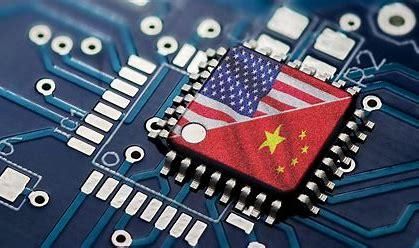
The main problem for
Washington is that the export controls may inadvertently accelerate the
development of China’s domestic semiconductor industry. By limiting China’s
access to foreign-made chips and manufacturing tools, the controls are creating
new demand for indigenous Chinese equipment, fabrication capacity, and AI
chips. This domestic demand is putting pressure on Chinese companies to invest
in and collaborate up and down the semiconductor supply chain. Firms in Japan,
the Netherlands, and the United States still have a virtual lock on the tools
needed to make the most advanced chips. But by preventing these firms from
selling their equipment to China, U.S. export controls are creating market
conditions that will drive revenue toward China’s equipment makers, allowing
these companies to invest in the research and development activities needed to
produce more sophisticated tools.
The export controls
will probably spur China’s semiconductor industry to catch up with the market
leaders. Given the current rate of progress, it is likely that China will,
before long, be able to manufacture the equipment needed to fabricate advanced
semiconductors. When that happens, China’s capable chip design firms will be
able to use domestic fabrication capacity to produce AI chips at scale and to
diffuse AI throughout its economy. Exactly when China will reach this threshold
is unknown, but the United States has only a temporary window of opportunity to
capitalize on the disparity.
This window of
opportunity may well be narrowed by industry trends. AI chip design companies
are connecting multiple less powerful chips—known as chipsets—to form a single
higher-performing package that is more capable of training and using AI models.
Many semiconductor companies are using this strategy to reduce design and
manufacturing costs, and Chinese firms are following suit with government
support. In addition, AI researchers in China and other countries are
developing smaller and less sophisticated AI models that, although still quite
capable, require less computational capacity. These two innovations could help
China keep pace in AI as its firms work to expedite the development of advanced
chip-making equipment.
In the meantime, U.S.
controls will cause chip and tool manufacturers in the United States and allied
nations to lose considerable business in China, leaving these companies with
less money to invest in research and development. In the short term, the effect
will likely be modest. The current AI boom has created a demand for
high-performing chips that dramatically exceeds supply; chips that Nvidia would
have sold in China are instead being sold elsewhere. But over the longer term,
pulling out of China’s huge market is expected to take a significant toll on
Western firms’ revenue.
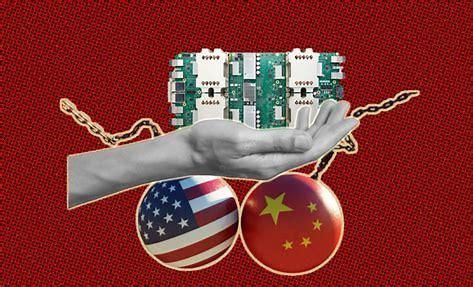
The export controls
could also expedite the fragmentation of the global economy and deepen the
geopolitical divide between China and the United States. A bigger yard and
higher fence would reduce economic interdependence and intensify geopolitical
rivalry, potentially putting the United States and China on a collision course.
Indeed, the chip controls have already ramped up U.S.-Chinese tensions,
contributing to Chinese leader Xi Jinping’s assessment that the United States
is seeking to implement “all-round containment, encirclement, and suppression
against us.”
Accelerating Innovation
The key question
moving forward is whether Washington can capitalize on the window of
opportunity afforded by the export controls to make paradigm-shifting
breakthroughs in computational science. To do this, the United States’ best bet
in the long run is to promote its own technological advances and innovative
capacities.
The U.S. government
has made good progress on this front with the 2022 CHIPS and Science Act, which
included a $52 billion investment in advanced semiconductor production, applied
research, prototyping, and commercialization. Advanced domestic fabrication
plants should make it easier for U.S.-based semiconductor researchers to
develop and scale new and leading-edge technologies. Furthermore, the National
Semiconductor Technology Center, which the CHIPS Act financed, is funding
state-of-the-art facilities to foster collaboration between U.S. semiconductor
companies and corporate, government, and university researchers.
These are important
steps in the right direction, but they will likely be insufficient. They focus
on accelerating incremental innovation rather than investing in the next big
thing. By the time Chinese domestic chip production has caught up, the United States
needs to have already moved on to tackling the next technological frontier in
advanced computing. Light-based computing (using photons to process data) and
neuromorphic computing (employing operations that mimic the human brain) are
two promising candidates for the next-generation computing paradigm. In
addition, quantum computing (using subatomic particles to process information)
should exponentially accelerate calculations for certain applications. These
emerging technologies hold the potential to compute at unprecedented speeds and
with much less energy use—facilitating scientific discovery, transforming
industries, and modernizing militaries. Washington must now advance these
moonshot technologies by funding basic research, expanding workforce development
programs, and investing in the domestic manufacturing ecosystem.
Driving U.S.
innovation should be Washington’s top priority when competing with Beijing.
Given China’s size, economic heft, and scientific sophistication, the U.S.
government has only limited capacity to obstruct its rival’s technological
development. The United States should, instead, focus its energies on its
innovative prowess and ability to stay at the head of the pack on AI and the
next generation of critical technologies.
For updates click hompage here