By Eric Vandenbroeck and co-workers
Egypt And Its Recent History
By using Islam as a
basis of nationalist legitimacy, both Anwar Sadat and Hosni
Mubarak abandoned the earlier commitments to secular modernity
that marked the Nasser era. It also created an opportunity for
conservative activists to promote their vision of Islam in public life.
In June 2009, U.S.
President Barack Obama delivered an address to the Muslim world proposing a new
start in Arab-U.S. relations. He chose to deliver his potentially trailblazing
speech at Cairo University in Egypt as a recognition of the country’s historic
role in the Muslim world. (Subsequent developments, including the Arab
uprisings and the rise of the Islamic State, dashed hopes for a shift on both
sides.)
Others have argued
that Egypt should be a core member of the regional alliance, which he said
would streamline regional dialogue and cooperation regarding the Palestinian
issue.
However, Egypt’s prominence as a regional leader has been
declining for years. Beginning in the early 1970s during Anwar Sadat’s
presidency, the country became increasingly inward-focused. It prioritized
combating political opposition and Islamist militancy at home rather than projecting
power abroad. Since Abdel-Fattah el-Sissi’s 2013
coup, which overthrew Muslim Brotherhood-affiliated President Mohamed Morsi,
Egypt’s foreign policy has been a reflection of its internal affairs. Countries
that support the Muslim Brotherhood, such as Turkey and Qatar, are considered
ideological adversaries, while those that oppose political Islam, such as Saudi
Arabia and the United Arab Emirates, are seen as tactical allies.
From Pan-Arabism To Egypt First
Britain’s occupation
of Egypt in 1882 cut off Egypt from its traditional foreign policy theaters,
especially in West Asia. Under British occupation, Egyptian nationalism
developed differently from the nationalist movements in West Asia and North
Africa. Most Egyptian heads of state did not try to project power beyond
Egypt’s borders, though there were two notable exceptions: King Farouk and
President Gamal Abdel Nasser.
Farouk was a
descendant of Muhammad Ali, who seized power in Egypt in 1805 and aspired to
create an Arab kingdom. Farouk decided to lead Egypt into the 1948 Arab-Israeli
war against the wishes of his own government and army command. In 1950, he
closed the Tiran Passes to Israeli shipping, and the following year, he played
an instrumental role in drafting the Joint Arab Defense Treaty to confront
Israel.
Nasser, meanwhile,
had distinct Arab roots, unlike most Egyptians, and hailed from the Asyut
governorate in Upper Egypt. He militarily and economically supported the
Algerian war of independence in 1954-62. In 1957, he sent troops to Syria to
defend the country against a possible Turkish invasion. In 1960, he dispatched
army units to Kuwait after Iraqi President Abdul Karim Qasim threatened to
occupy it. Two years later, he sent one-third of the Egyptian army to Yemen to
defend the fledgling republican regime after a coup overthrew its king. Even
after Egypt’s staggering defeat in the 1967 Six-Day War, Nasser remained a
powerful figure in the Arab world. Though many Arab leaders viewed him as an
enemy, the vast majority of the Arab public saw him as the uncontested champion
of Arab nationalism.
Since Nasser’s death
in 1970, however, Egypt’s regional ambitions have been limited. Egyptian
presidents have recognized that the poor state of the country’s economy
disqualified it from playing a leading role in regional politics. Anwar Sadat,
who succeeded Nasser, opposed sending a single Egyptian soldier to fight on
behalf of Arabs. During his presidency, he was boycotted by most Arab leaders
because he made unilateral peace with Israel. Hosni Mubarak, who became
president in 1981 after Sadat’s assassination, sent Egyptian troops to Saudi
Arabia in 1990 as part of the U.S. coalition to liberate Kuwait from Iraqi
occupation. But his move was not motivated by a desire for Egypt to become a
regional power but by a desire to stop Iraq from becoming one.
El-Sissi’s Politics Of Regime Survival
Current President
Abdel-Fattah el-Sissi has mostly followed suit. Since
becoming president, he has been preoccupied with internal security matters. As
the only Egyptian president to stage a coup to seize power since 1952, his top
concern has been staying in control, not reestablishing Egypt’s leadership of
the Arab world. His focus has been on safeguarding Egypt’s borders from
incoming militants and arms, which could be used to support Egypt’s homegrown
militant movements.
El-Sissi has no
regional power ambitions. However, he doesn’t want the aggressive foreign
policies of the Saudi and Emirati crown princes to overshadow Egypt’s
historical role in the region. He has deep concerns about the Gulf countries’
peace deals with Israel, which threaten to limit the need for Egypt’s regional
mediation. Cairo gained its reputation as a regional peace broker after the
1991 Madrid Peace Conference. But since then, the Palestinians have turned to
Turkey to facilitate a reconciliation between Hamas and Fatah, while Hamas has
sought Qatar’s help to ease Israel’s blockade on Gaza. Egypt is also
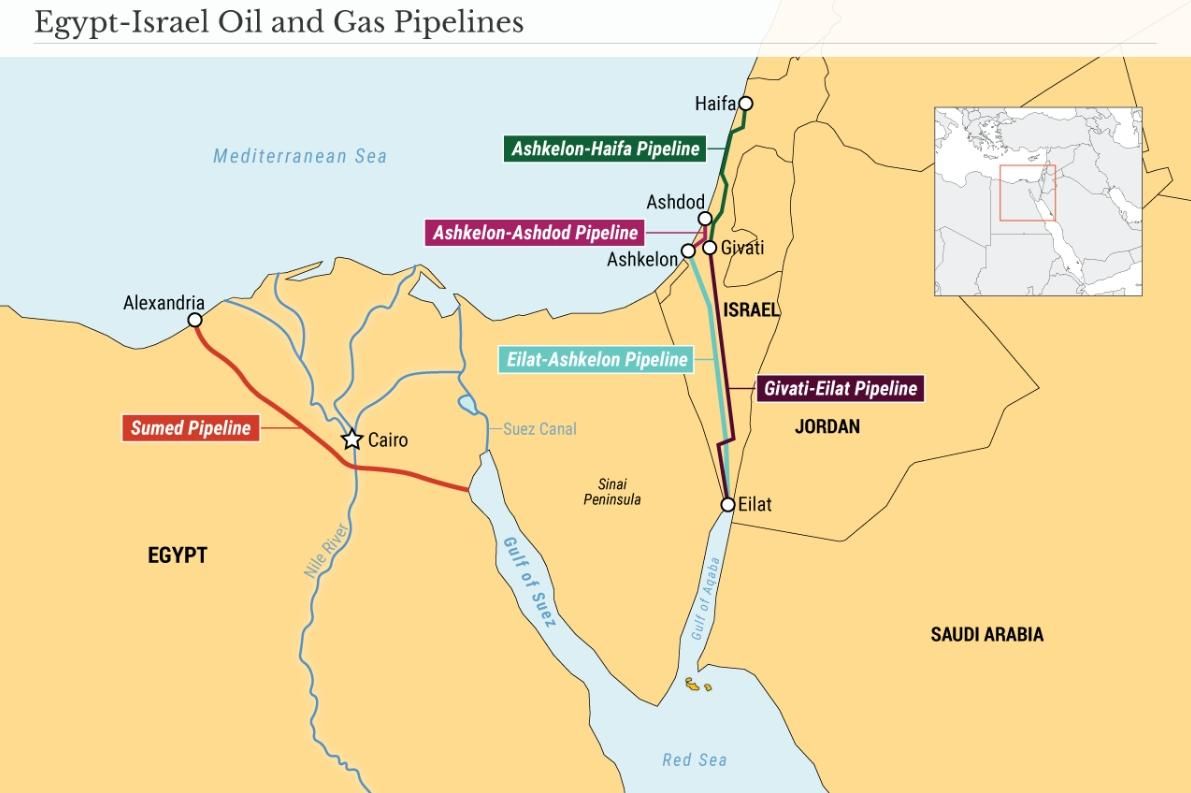
increasingly economically alienated. Last October, Israel Pipeline Company
signed a deal with the UAE to transport oil from Abu Dhabi to Europe via the
Eilat-Ashkelon Pipeline. The agreement effectively reduces oil shipments via
the Suez Canal by 17 percent and compromises Egypt’s Sumed oil pipeline from
the Gulf of Suez to Alexandria.
Egypt adopted a
relatively proactive and pro-Palestinian approach to Israel’s recent operation
in Gaza. (By comparison, it was relatively passive during similar bouts of
violence in 2009 and 2014.) In 2014, Egypt pressured Hamas to accept Israel’s
terms for a cease-fire, but this time around, it brokered a deal that took
effect without any preconditions. It painted Israel as the aggressor in the
conflict, and a prominent Egyptian Islamic scholar called on Muslims to seize
Jerusalem and halt Israel’s West Bank settlements.
Still, Israeli Prime
Minister Benjamin Netanyahu thanked el-Sissi for
facilitating the cease-fire. As for Hamas, it was skeptical of Egypt’s offer of
$500 million for Gaza’s reconstruction, knowing that Egyptian companies run by
the armed forces would lead the reconstruction efforts and that these efforts
would increase Egypt’s influence over Gaza.
Egypt’s
government-controlled media referred to Cairo’s efforts to negotiate a
cease-fire deal as the dawning of a golden era in Egyptian foreign policy. The
media lauded Egyptian officials’ negotiation skills, ignoring the fact that
Biden played the decisive role in stopping the fighting. The claim that Egypt
was restoring its relevance as an international peace broker rings hollow
because in Egypt, Gaza is often considered more of a domestic matter rather
than a regional one. (Cairo occupied the Gaza Strip from 1948 until 1967.) In
any event, successful mediation does not make a country a regional power.
Egyptian media have
exaggerated el-Sissi’s achievements. They claimed
that his forceful diplomacy protected the Palestinians against Israeli
aggression. It also spread propaganda about his military coup, claiming it was
a popular revolution that saved Egypt from the Muslim Brotherhood. The media
also glorified Egypt’s massive troop mobilization in the northwest – which it
claimed resolved the Libyan crisis to Egypt’s advantage.
Egypt has myriad
other problems with which to contend. It has a weak economy, heavy debt, poor
educational system and high unemployment. According to the World Bank, Egypt’s
per capita income in 2019 was $3,000 compared to $8,000 for the Middle East and
North Africa region. Although real incomes saw modest growth over the past few
years, they are not sustainable in the long term because Egypt’s economic
reforms are superficial. The Egyptian economy relies heavily on the public
sector, led by the armed forces. The International Monetary Fund strongly
recommended that the government promote the private sector, but instead, it
increased the military’s involvement in the economy.
The 1952 military
coup ended a century of capitalistic development. Nasser’s nationalization of
the economy had devastating consequences for Egypt’s economic growth. When
Sadat made peace with Israel, he slashed the military budget but allowed the
armed forces to play an active role in the economy to generate revenue. Under
Mubarak, the military effectively dominated the economy, a trend that only grew
under el-Sissi, who’s dependent on the loyalty of
senior army officers who oppose any attempts at privatization.
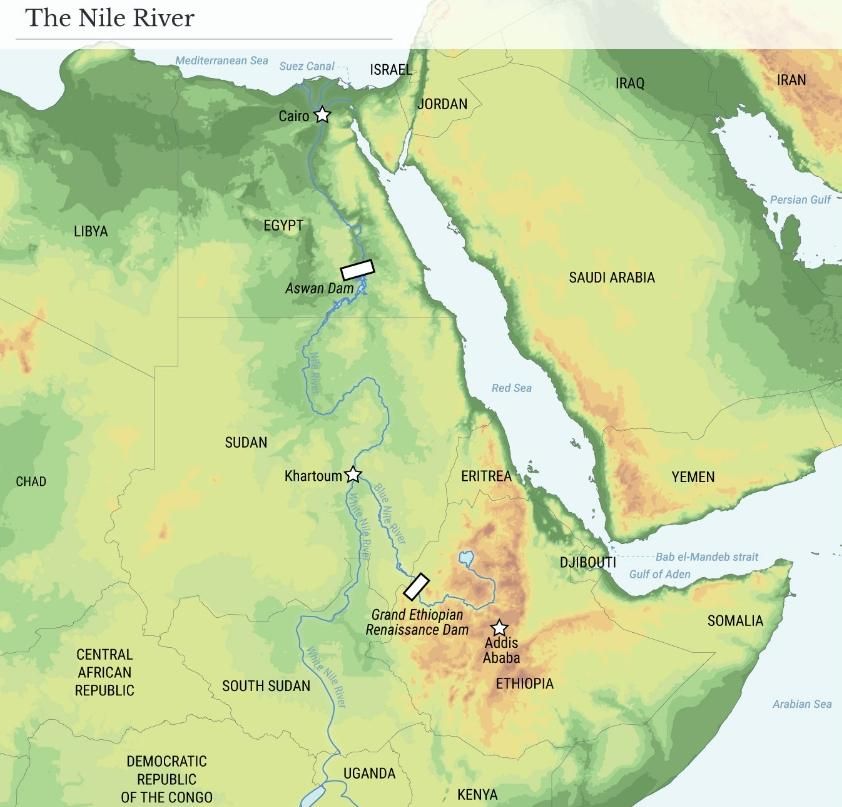
Egypt is also facing
a low-intensity insurgency in northern Sinai and an intensifying water dispute
with Ethiopia over the Grand Ethiopian Renaissance Dam. (The project, which is
still under construction, has already decreased Egypt’s production of staple
crops – wheat, rice, and sugar – by more than 25 percent.) El-Sissi believes
Ethiopian Prime Minister Abiy Ahmed is seeking to transform his country into an
economic hub and marginalize Egypt’s role in the region.
A country with an
economy controlled by its military and facing an existential threat to its
water supply can hardly expect to become a regional power. El-Sissi has shifted
Egypt’s focus from the Middle East to Africa, in part because of the dispute
over the dam, but he remains too preoccupied with the existential threat from
the south to worry about restoring Egypt’s regional power status.
Egypt enjoys
geostrategic advantages that qualify it to play a leading regional role. It
straddles Africa, Asia and Europe and controls one of the world’s most
important maritime routes. It is the Arab world’s most populous country and has
its most homogeneous population. However, Egypt remains inwardly focused, and
its people have little interest in non-Egyptian affairs. Considering the state
of the country’s economy, it’s unlikely these conditions will change any time
soon.
Yet Egypt had
a weak response to the Grand Ethiopian Renaissance Dam (GERD), a massive
project that threatens to decrease the flow of water downstream through the
Nile River. Yet the expenditure of billions of dollars on arms despite the
government’s refusal to resort to military action to settle its dam dispute.
But this level
of criticism directed at the president is extremely rare in Egypt.
Many Egyptians share
opinions on the water issue. And that el-Sissi should
not have signed the 2015 Nile Agreement, which absolved Ethiopia from
respecting Egypt’s water claims.
Egyptian leaders are
unaccustomed to being criticized. For example, the Egyptian media never
criticized former President Gamal Abdel Nasser during his lifetime. After the
1967 Six-Day War, he accepted full responsibility for its disastrous outcome
and admitted the failures of the armed forces. Still, the Egyptian public
showered him with praise and believed he would lead them to victory. But Nasser
knew how to communicate with the people, unlike el-Sissi,
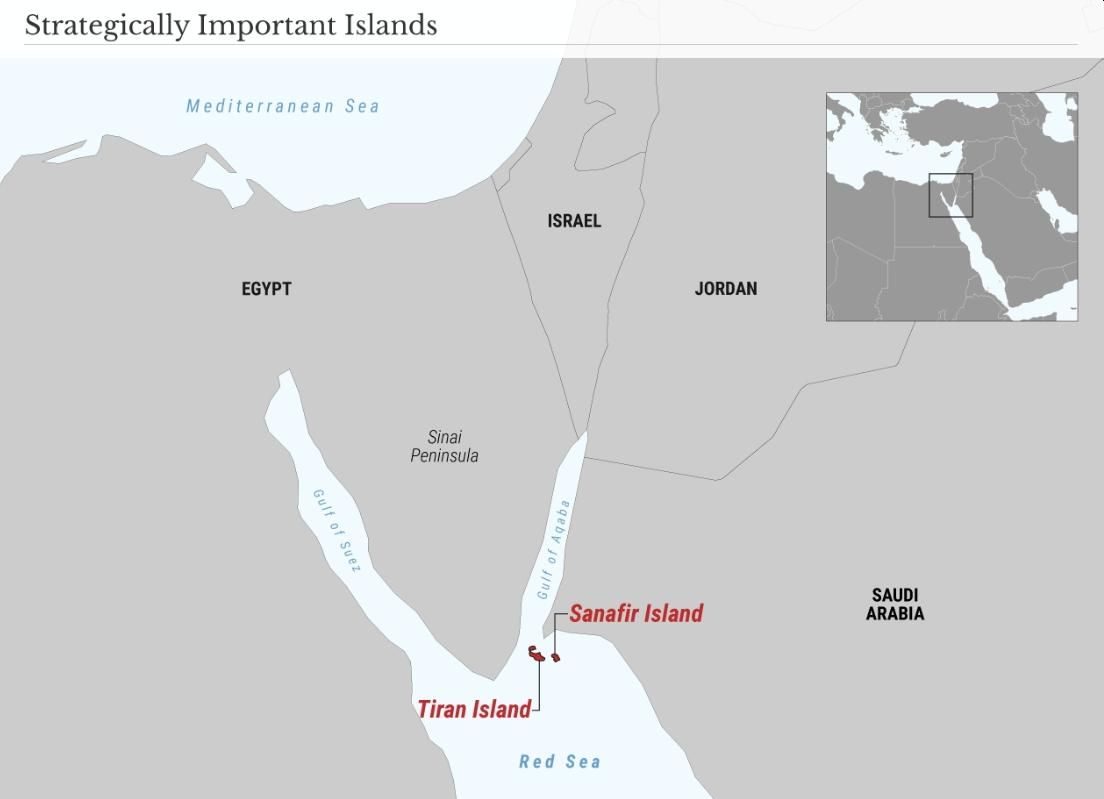
who in 2016 announced that he would deploy troops throughout the country in six
hours after activists called for mass protests against the deal to give Riyadh
control over the Red Sea islands.
Legacy Of Apathy
There are many
explanations for the Egyptian people’s hesitation to rebel against repressive
leaders. One argument attributes political inaction to the country’s rule by
foreigners – Persians, Romans and Arabian Muslim conquerors – for more than two
millennia. Even prior to that time, Egypt was ruled for three millennia by the
pharaohs, to whom Egyptians attached divine attributes that justified their
absolute power.
Another explanation
is that hydraulic societies promote political apathy because imperial dynasties
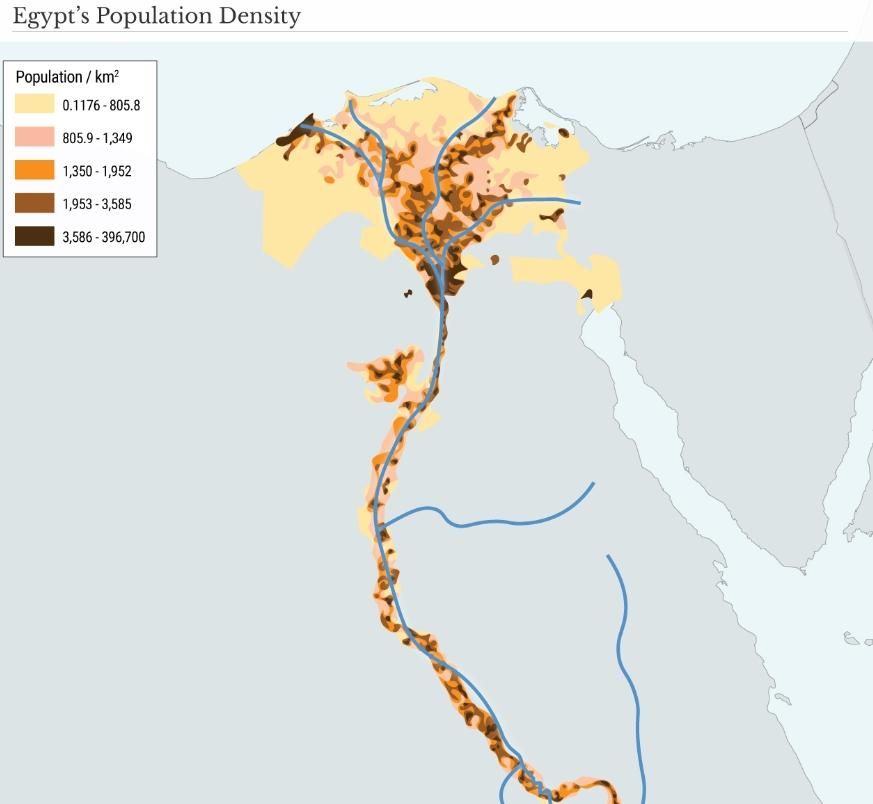
monopolize water supplies and regulate their distribution. Egypt’s population
lives on just 5 percent of its 1 million square kilometers of land, making it
easy for its rulers to control them in the flat and narrow plains.
The pharaohs’
establishment of the world’s first centralized state, when Menes united the
delta and upper Egypt 5,000 years ago, enabled them to keep the population at
bay under the hegemony of a powerful political entity. The historical
experiences of a people brought together by destiny feed into their collective
consciousness, which can either trigger or inhibit collective action. While
individual Egyptians do take issue with the regime, these personal acts of
defiance do not grow into widespread demands for reform. Those who do call for
change become pessimistic over time, realizing they cannot mobilize their
fellow citizens who fear government reprisal. Eventually, they reach the point
of believing that they do not stand a chance against the state’s overwhelming
machinery of coercion.
Stability And Tolerance
Despite the tendency
toward apathy, Egypt has witnessed several bouts of unrest throughout its
history. In 1919, a pro-independence uprising swept through Egypt after the
British arrested nationalist leader Saad Zaghloul, who was later exiled. In
1922, the British declared Egypt an independent state and introduced a system
of participatory politics – though they remained in control of the Suez Canal
area. In 1968, workers at the Helwan industrial complex south of Cairo
protested against the light prison sentences given to air force commanders
deemed responsible for Egypt’s defeat in the Six-Day War. In 1971-72, student
demonstrations erupted against President Anwar Sadat’s reluctance to go to war
against Israel and liberate Sinai. (He reneged on a promise to end Israeli
occupation before the end of 1971.)
But these public
displays of discontent were short-lived. Egypt’s agricultural society and
predictable pattern of living engendered the development of a rich culture that
puts a premium on stability and tolerance. Egyptians welcomed Alexander the
Great as their liberator from the Persians and treated him as a deity. They
accepted the Ptolemaic Kingdom that succeeded him, especially after its kings
immersed themselves in the Egyptian way of life. Egyptians even accepted
Cleopatra, who was of Macedonian heritage, as one of them. After succumbing to
the Roman Empire and its Byzantine successor, they did not resist the Muslim
conquest in the 7th century and appreciated the Arab military commander Amr ibn
al-As for freeing them from Byzantine rule. They adopted the Arabic language,
unlike, for example, the Persians and Turks, who adopted Islam but clung to
their own language and cultural heritage.
When the Fatimids
conquered Egypt in 969, Egyptians converted to Shiism. Then, in 1169, when
Saladin gained control over Egypt, they reverted back to Sunnism. They did not
resist the French, who occupied Egypt between 1798 and 1801 – in part because
the French brought with them modernization and, unlike the Mamluks, treated the
Egyptians with respect. The Ottomans sent Muhammad Ali, an Albanian army
officer, to Egypt to rein in the Mamluks after the French departure, but he
established a dynasty that lasted from 1805 until 1952. He founded modern
Egypt, making it a cultural, educational and literary hub.
Disappointment With Self-Rule
In 1952, Egyptian
army officers staged a military coup, which eventually led to Nasser taking the
reins of power. He wanted to develop Egypt economically but got bogged down in
military adventures throughout the region. He led Egypt from one disaster to another:
the 1956 Suez War, the Yemen War and the disastrous Six-Day War. Yet, Egyptians
did not hold him accountable for his erratic policies, and many still view him
as a national hero. After Nasser’s untimely death in 1970, Anwar Sadat became
president. He deconstructed Nasser’s socialist economy, introduced
neoliberalism and created a class of nouveau riche business entrepreneurs. In
1977, hundreds of thousands of poor Egyptians protested against the
government’s curtailing of food subsidies – though they made no political
demands. Sadat found it more practical to reinstate the subsidies and ignore
the recommendations of international financial donors. Hosni Mubarak, who
succeeded Sadat after his assassination in 1981, allied with the neoliberal
class and allowed the army to become a significant economic player, to the
detriment of most Egyptians, who languished in poverty. In 2008, the rise of
the April 6 reform movement – a coalition of young activists and organized
labor – was a testament to the Mubarak regime’s decay and the armed forces’
resentment of his scheme to have his son Gamal succeed him.
The torture and
brutal killing in June 2010 of an innocent young pharmacist triggered
short-lived and inconsequential protests in Cairo and Alexandria. In contrast,
the uprising in Tunisia in 2010 that followed the death of a street vendor
named Mohamed Bouazizi – who set himself on fire after being harassed by police
– triggered the Arab Spring protests and reminded Egyptians of the excesses of
their country’s security forces. The ouster of Tunisian President Zine El
Abidine Ben Ali after 24 years in office gave Egyptians hope that they could do
the same.
After Mubarak
resigned following mass protests, the Supreme Council of the Armed Forces
allowed Mohammed Morsi to become president with the intention of deposing him
and reclaiming complete political control. Politically inept, Morsi angered
many Egyptians, and the military overthrew him in 2013. El-Sissi became
president in 2014 and continues to maintain a tight grip on power.
Under his leadership,
authoritarian rule in Egypt has reached a new peak. Egypt’s history and
geographic isolation have led many Egyptians to accept the country’s despotic
leadership, believing that better days are ahead. But Egyptian society can
flourish under the management of a bold leader – which it hasn’t had in
decades.
For updates click hompage here