By Eric Vandenbroeck and co-workers
The world has changed
more in the past four years than in the previous 30. Our news feeds brim with
strife and tragedy. Russia bombards Ukraine, the Middle East seethes, and wars
rage in Africa. As conflicts are on the rise, democracies, it seems, are in
decline. The post–Cold War era is over. Despite the hopes that followed the fall of the Berlin Wall, the globe did not unite in
embracing democracy and market capitalism. Indeed, the forces that were
supposed to bring the world together—trade, energy, technology, and
information—are now pulling it apart.
We live in a new
world of disorder. The liberal, rules-based order that arose after the end of World War II is now dying.
Multilateral cooperation is giving way to multipolar competition. Opportunistic
transactions seem to matter more than defending international rules.
Great-power competition is back, as the rivalry between China and the United
States sets the frame of geopolitics. But it is not the only force shaping
global order. Emerging middle powers, including Brazil, India, Mexico, Nigeria,
Saudi Arabia, South Africa, and Turkey, have become game-changers. Together,
they have the economic means and geopolitical heft to tilt the global order
toward stability or greater turmoil. They also have a reason to demand change:
the post–World War II multilateral system did not adapt to adequately reflect
their position in the world and afford them the role that they deserve. A
triangular contest among what I call the global West, the global East, and the global South is taking shape. In choosing either to
strengthen the multilateral system or seek multipolarity, the global South will
decide whether geopolitics in the next era leans toward cooperation,
fragmentation, or domination.
The next five to ten
years will likely determine the world order for decades to come. Once an order
settles in, it tends to stick for a while. After
World War I, a new order lasted two decades. The next order, after World
War II, lasted for four decades. Now, 30 years after the end of the Cold War,
something new is again emerging. This is the last chance for Western countries
to convince the rest of the world that they are capable of dialogue rather than
monologue, consistency rather than double standards, and cooperation rather
than domination. If countries eschew cooperation for competition, a world of
even greater conflict looms.
Every state has an
agency, even small ones. The key is to try to maximize influence and, with the
tools available, push for solutions. For me, this means doing everything I can
to preserve the liberal world order, even if that system is not in vogue right
now. International institutions and norms provide the framework for global
cooperation. They need to be updated and reformed to better reflect the growing
economic and political power of the global South and the global East. Western
leaders have long talked about the urgency of fixing multilateral institutions
such as the United Nations. Now, we must get it done, starting with rebalancing
the power within the UN and other international bodies such as the World Trade
Organization, the International Monetary Fund, and the World Bank. Without such
changes, the multilateral system as it exists will crumble. That system is not
perfect; it has inherent flaws and can never exactly reflect the world around
it. But the alternatives are much worse: spheres of influence, chaos, and
disorder.
History Did Not End
Soon after, Germany
reunified, central and eastern Europe escaped the
shackles of communism, and what had been a bipolar world—pitting a communist
and authoritarian Soviet Union against a capitalist and democratic United
States—became a unipolar one. The United States was
now the undisputed superpower. The liberal international order had won.
The political
scientist Francis Fukuyama called that moment “the
end of history,” and I wasn’t the only one to believe that the triumph of
liberalism was certain. Most nation-states would invariably pivot toward
democracy, market capitalism, and freedom. Globalization would lead to economic
interdependence. Old divisions would melt, and the world would become one. Even
at the end of the decade, this future still seemed imminent.
But that future never
arrived. The unipolar moment proved short-lived. After the
9/11 terrorist attacks in 2001, the West turned its back on the basic
values that it claimed to uphold. Its commitment to international law was
questioned. U.S.-led interventions in Afghanistan and Iraq failed. The global financial crash of 2008 delivered a severe
reputational blow to the West’s economic model, rooted in global markets. The
United States no longer drives global politics alone. China emerged as a
superpower through its skyrocketing manufacturing, exports, and economic growth,
and its rivalry with the United States has since come to dominate geopolitics.
The last decade has also seen the further erosion of multilateral institutions,
growing suspicion and friction regarding free trade, and intensifying
competition over technology.
Russia’s full-scale
war of aggression in Ukraine in February 2022 dealt
another body blow to the old order. It was one of the most blatant violations
of the rules-based system since the end of World War II, and certainly the
worst Europe had seen. That the culprit was a permanent member of the UN
Security Council, which was set up to preserve peace, was all the more damning.
States that were supposed to uphold the system brought it crashing down.
Multilateralism Or Multipolarity
The international
order, however, has not disappeared. Amid the wreckage, it is shifting from
multilateralism to multipolarity. Multilateralism is a system of
global cooperation that rests on international institutions and common rules.
Its key principles apply equally to all countries, irrespective of size.
Multipolarity, by contrast, is an oligopoly of power. The structure of a
multipolar world rests on several, often competing poles. Dealmaking and
agreements among a limited number of players form the structure of such an
order, invariably weakening common rules and institutions. Multipolarity can
lead to ad hoc and opportunistic behavior and a fluid array of alliances based
on states’ real-time self-interest. A multipolar world risks leaving small and
medium-sized countries out—bigger powers make deals over their heads. Whereas
multilateralism leads to order, multipolarity tends toward disorder and
conflict.
#UntenThere is a
growing tension between those who promote multilateralism and an order based on
the rule of law and those who speak the language of multipolarity and transactionalism. Small states and middle powers, as well
as regional organizations such as the African Union, the Association of
Southeast Asian Nations, the EU, and the South American bloc Mercosur, promote
multilateralism. China, for its part, promotes multipolarity with shades of
multilateralism; it ostensibly endorses multilateral groupings such as
BRICS—the non-Western coalition whose original members were Brazil, Russia,
India, China, and South Africa—and the Shanghai Cooperation Organization that
actually want to give rise to a more multipolar order. The United States has
shifted its emphasis from multilateralism toward transactionalism
but still has commitments to regional institutions such as NATO. Many states,
both big and small, are pursuing what can be described as a multivectoral
foreign policy. In essence, they aim to diversify their relations with multiple
actors rather than aligning with any one bloc.
A transactional or multivectoral foreign policy is dominated by interests.
Small states, for instance, often balance between great powers: they can align
with China in some areas and side with the United States in others, all while
trying to avoid being dominated by any one actor. Interests drive the practical
choices of states, and this is entirely legitimate. But such an approach need
not eschew values, which should underpin everything a state does. Even a
transactional foreign policy should rest on a core of fundamental values. They
include the sovereignty and territorial integrity of states, the prohibition of
the use of force, and the respect for human rights and fundamental freedoms.
Countries have, overwhelmingly, a clear interest in upholding these values and
ensuring that violators face real consequences.
Many countries are
rejecting multilateralism in favor of more ad hoc arrangements and deals. The
United States, for instance, is focused on bilateral trade and business
agreements. China uses the Belt and Road Initiative, its vast global
infrastructure investment program, to facilitate both bilateral diplomacy and
economic transactions. The EU is forging bilateral free trade agreements that
risk falling short of World Trade Organization rules. This, paradoxically, is
happening when the world needs multilateralism more than ever to solve common
challenges, such as climate change, development shortfalls, and the regulation
of advanced technologies. Without a strong multilateral system, all diplomacy
becomes transactional. A multilateral world makes the common good a
self-interest. A multipolar world runs simply on self-interest.
Finland’s “Values-Based Realism”
Foreign policy is
often based on three pillars: values, interests, and power. These three
elements are key when the balance and dynamics of world order are changing. I
come from a relatively small country with a population of close to six million
people. Although we have one of the largest defense forces in Europe, our
diplomacy is premised on values and interests. Power, both the hard and the
soft kind, is mostly a luxury of the bigger players. They can project military
and economic power, forcing smaller players to align with their goals. But
small countries can find power in cooperating with others. Alliances,
groupings, and smart diplomacy are what give a smaller player influence well
beyond the size of its military and economy. Often, those alliances are based
on shared values, such as a commitment to human rights and the rule of law.
As a small country
bordering an imperial power, Finland has learned that sometimes a state must
set aside some values to protect others, or simply to survive. Statehood is
based on the principles of independence, sovereignty, and territorial
integrity. After World War II, Finland retained its independence, unlike our
Baltic friends, who were absorbed by the Soviet Union. But we lost ten percent
of our territory to the Soviet Union, including the areas where my father and
grandparents were born. And, crucially, we had to give up some sovereignty.
Finland was unable to join international institutions we felt we naturally
belonged to, notably the EU and NATO.
During the Cold War,
Finnish foreign policy was defined by “pragmatic realism.” To keep the Soviet
Union from attacking us again, as it had in 1939, we had to compromise our
Western values. This era in Finnish history, which has lent the term
“Finlandization” to international relations, is not one we can be particularly
proud of, but we managed to keep our independence. That experience has made us
wary of any possibility of its repetition. When some suggest that
Finlandization might be a solution for ending the war in Ukraine, I vehemently
disagree. Such a peace would come at too great a cost, which would effectively
be the surrender of sovereignty and territory.
After the end of the
Cold War, Finland, like so many other countries, embraced the idea that the
values of the global West would become the norm—what I call “values-based
idealism.” This allowed Finland to join the European Union in 1995. At the same
time, Finland made a serious mistake: it decided, voluntarily, to stay out of
NATO. (For the record, I have been an avid advocate of Finnish NATO membership
for 30 years.) Some Finns harbored an idealistic belief that Russia would
eventually become a liberal democracy, so joining NATO was unnecessary. Others
feared that Russia would react badly to Finland joining the alliance. Yet
others thought that Finland contributed to maintaining a balance—and therefore
peace—in the Baltic Sea region by staying out of the alliance. All these
reasons turned out to be wrong, and Finland has adjusted accordingly; it joined
NATO after Russia’s full-scale attack on Ukraine.
That was a decision
that followed from both Finland’s values and its interests. Finland has
embraced what I have called “values-based realism”: committing to a set of
universal values based on freedom, fundamental rights, and international rules
while still respecting the realities of the world’s diversity of cultures and
histories. The global West must stay true to its values but understand that the
world’s problems will not be solved only through collaboration with like-minded
countries.
Values-based realism
might sound like a contradiction of terms, but it is not. Two influential
theories of the post–Cold War era seemed to pit universal values against a more
realist assessment of political fault lines. Fukuyama’s end of history thesis saw
the triumph of capitalism over communism as heralding a world that would become
ever more liberal and market-oriented. The political scientist Samuel
Huntington’s vision of a “clash of civilizations” predicted that the fault
lines of geopolitics would move from ideological differences to cultural ones.
In truth, states can draw from both understandings in negotiating today’s
shifting order. In crafting foreign policy, governments of the global West can
maintain their faith in democracy and markets without insisting they are
universally applicable; in other places, different models may prevail. And even
within the global West, the pursuit of security and the defense of sovereignty
will occasionally make it impossible to strictly adhere to liberal ideals.
Countries should
strive for a cooperative world order of values-based realism, respecting both
the rule of law and cultural and political differences. For Finland, that means
reaching out to the countries of Africa, Asia, and Latin America to better understand
their positions on Russia’s war in Ukraine and other ongoing conflicts. It also
means holding pragmatic discussions on an equal footing on important global
issues, such as those related to do with technology sharing, raw materials, and
climate change.
The Triangle of Power
Three broad regions
now make up the global balance of power: the global West, the global East, and
the global South. The global West comprises roughly 50 countries and has
traditionally been led by the United States. Its members include primarily
democratic, market-oriented states in Europe and North America and their
far-flung allies Australia, Japan, New Zealand, and South Korea. These
countries have typically aimed to uphold a rules-based multilateral order, even
if they disagree on how best to preserve, reform, or reinvent it.
The global East
consists of roughly 25 states led by China. It includes a network of aligned
states—notably Iran, North Korea, and Russia—that seek to revise or supplant
the existing rules-based international order. These countries are bound by a
common interest, namely, the desire to reduce the power of the global West.
The global South,
comprising many of the world’s developing and middle-income states from Africa,
Latin America, South Asia, and Southeast Asia (and the majority of the world’s
population) spans roughly 125 states. Many of them suffered under Western colonialism
and then again as theaters for the proxy wars of the Cold War era. The global
South includes many middle powers or “swing states,” notably Brazil, India,
Indonesia, Kenya, Mexico, Nigeria, Saudi Arabia, and South Africa. Demographic
trends, economic development, and the extraction and export of natural
resources drive the ascendance of these states.
The global West and
the global East are fighting for the hearts and minds of the global South. The
reason is simple: they understand that the global South will decide the
direction of the new world order. As the West and the East pull in different
directions, the South has the swing vote.
The global West
cannot simply attract the global South by extolling the virtues of freedom and
democracy; it also needs to fund development projects, make investments in
economic growth, and, most importantly, give the South a seat at the table and
share power. The global East would be equally mistaken to think that its
spending on big infrastructure projects and direct investment buys it full
influence in the global South. Love cannot be easily bought. As Indian Foreign
Minister Subrahmanyam Jaishankar has noted, India and other countries in the
global South are not simply sitting on the fence but rather standing on their
own ground.
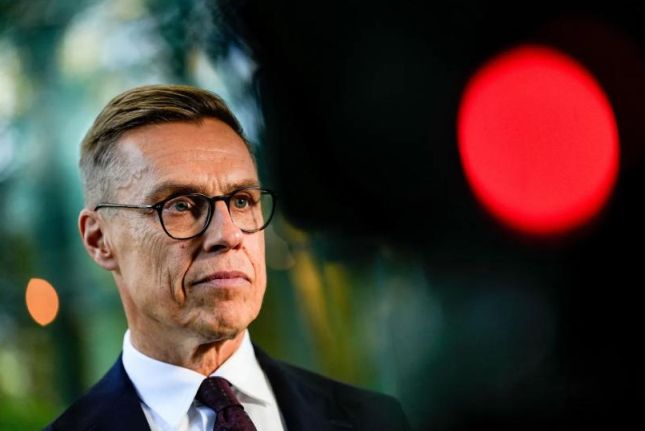
Finland’s President Alexander Stubb in Washington,
D.C., October 2025
In other words, what
both Western and Eastern leaders will need is values-based realism. Foreign
policy is never binary. A policymaker has to make daily choices that involve
both values and interests. Will you buy weapons from a country that is
violating international law? Will you fund a dictatorship that is fighting
terrorism? Will you give aid to a country that considers homosexuality a crime?
Do you trade with a country that allows the death penalty? Some values are
nonnegotiable. These include upholding fundamental and human rights, protecting
minorities, preserving democracy, and respecting the rule of law. These values
anchor what the global West should stand for, especially in its appeals to the
global South. At the same time, the global West has to understand that not
everyone shares these values.
Values-based realism
aims to find a balance between values and interests in a way that prioritizes
principles but recognizes the limits of a state’s power when the interests of
peace, stability, and security are at stake. A rules-based world order underpinned
by a set of well-functioning international institutions that enshrine
fundamental values remains the best way to prevent competition leading to
collision. But as these institutions have lost their salience, countries must
embrace a harder sense of realism. Leaders must acknowledge the differences
among countries: the realities of geography, history, culture, religion, and
different stages in economic development. If they want others to better address
issues such as citizens’ rights, environmental practices, and good governance,
they should lead by example and offer support—not lectures.
Values-based realism
begins with dignified behavior, with respect for the views of others and an
understanding of differences. It means collaboration based on partnerships of
equals rather than some historical perception of what relations among the global
West, East, and South should look like. The way for states to look forward
rather than backward is to focus on important common projects such as
infrastructure, trade, and climate change mitigation and adaptation.
Many obstacles lie
before any attempt by the world’s three spheres to build a global order that at
once respects differences and allows states to set their national interests in
a broader framework of cooperative international relations. The costs of failure,
however, are immense: the first half of the twentieth century was warning
enough.
Uncertainty is a part
of international relations, and never more so than during the transition of one
era into another. The key is to understand why the change is happening and how
to react to it. If the global West reverts to its old ways of direct or indirect
dominance or outright arrogance, it will lose the battle. If it realizes that
the global South will be a key part of the next world order, it just might be
able to forge both values-based and interest-based partnerships that
can tackle the main challenges of the globe. Values-based realism will give the
West enough room to navigate this new age of international relations.
Worlds To Come
A set of postwar
institutions helped steer the world through its most rapid era of development
and sustained an extraordinary period of relative peace. Today, they are at
risk of collapsing. But they must survive, because a world based on competition
without cooperation will lead to conflict. To survive, however, they must
change, because too many states lack agency in the existing system and, in the
absence of change, will divest themselves from it. These states can’t be blamed
for doing so; the new world order will not wait.
At least three
scenarios could emerge in the decade ahead. In the first one, the current
disorder would simply persist. There would still be elements of the old order
left, but respect for international rules and institutions would be à la carte
and mostly based on interests, not innate values. The capacity to solve major
challenges would remain limited, but the world at least would not devolve into
greater chaos. Ending conflicts, however, would become especially difficult
because most peace deals would be transactional and lack the authority that
comes with the imprimatur of the United Nations.
Things could be
worse: in a second scenario, the foundations of the liberal international
order—its rules and institutions—would continue to erode, and the existing
order would collapse. The world would move closer to chaos without a clear
nexus of power and with states unable to solve acute crises, such as famines,
pandemics, or conflicts. Strongmen, warlords, and nonstate actors would fill
power vacuums left behind by receding international organizations. Local
conflicts would risk triggering wider wars. Stability and predictability would
be the exception, not the norm, in a dog-eat-dog world. Peace mediation would
be close to impossible.
But it doesn’t have
to be that way. In a third scenario, a new symmetry of power among the global
West, East, and South would produce a rebalanced world order in which countries
could deal with the most pressing global challenges through cooperation and dialogue
among equals. That balance would contain competition and nudge the world toward
greater cooperation on climate, security, and technology issues—critical
challenges that no country can solve alone. In this scenario, the principles of
the UN Charter would prevail, leading to just and lasting agreements. But for
that to happen, international institutions must be reformed.
Reform begins at the
top, namely, in the United Nations. Reform is always a long and complicated
process, but there are at least three possible changes that would automatically
strengthen the UN and give agency to those states that feel that they don’t have
enough power in New York, Geneva, Vienna, or Nairobi.
First, all major
continents need to be represented in the UN Security Council at all times. It
is simply unacceptable that there is no permanent representation from Africa
and Latin America in the Security Council and that China alone represents Asia.
The number of permanent members should be increased by at least five: two from
Africa, two from Asia, and one from Latin America.
Second, no single
state should have veto power in the Security Council. The veto was necessary in
the aftermath of World War II, but in today’s world, it has incapacitated the
Security Council. The UN agencies in Geneva work well precisely because no single
member can prevent them from doing so.
Third, if a permanent
or rotating member of the Security Council violates the UN Charter, its
membership in the UN should be suspended. This would mean that the body would
have suspended Russia after its full-scale invasion of Ukraine. Such a
suspension decision could be taken in the General Assembly. There should be no
room for double standards in the United Nations.
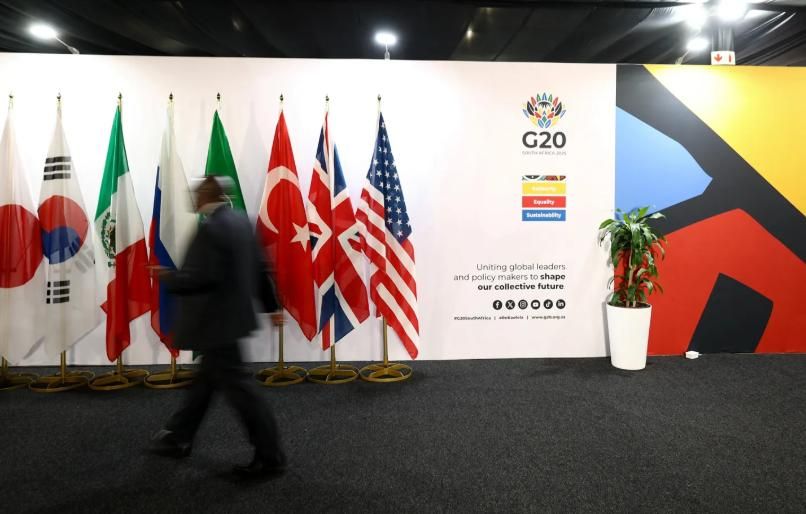
The G20 Leaders’ Summit in Johannesburg, November 2025
Global trade and
financial institutions also need to be updated. The World Trade Organization,
which has been crippled for years by the paralysis of its dispute settlement
mechanism, is still essential. Despite an increase in free trade agreements
outside the WTO’s purview, over 70 percent of global trade is still conducted
under the WTO’s “most favored nation” principle. The point of the multilateral
trading system is to ensure the fair and equitable treatment of all its
members. Tariffs and other infringements of WTO rules end up hurting everyone.
The current reform process must lead to greater transparency, especially with
respect to subsidies, and flexibility in the WTO decision-making processes. And
these reforms must be enacted swiftly; the system will lose credibility if the
WTO remains mired in its current impasse.
Reform is hard, and
some of these proposals may sound unrealistic. But so did those made in San
Francisco when the United Nations was founded over 80 years ago. Whether the
193 members of the United Nations adopt these changes will depend on
whether they prioritize their foreign policy based on values, interests,
or power. Sharing power on the basis of values and interests was the foundation
of the creation of the liberal world order after World War II. It is time to
revise the system that has served us so well for almost a century.
The wildcard for the
global West in all of this will be whether the United States wants to preserve
the multilateral world order it has been so instrumental in building and from
which it has benefited so greatly. That may not be an easy path, given Washington’s
withdrawal from key institutions and agreements, such as the World Health
Organization and the Paris climate agreement, and its newly mercantilist
approach to cross-border trade. The UN system has helped preserve peace between
the great powers, enabling the United States to emerge as the leading
geopolitical power. In many UN institutions, it has taken the leading role and
been able to drive its policy goals very effectively. Global free trade has
helped the United States establish itself as the leading economic power in the
world while also bringing low-cost products to American consumers. Alliances
such as NATO have given the United States military and political advantages
outside its own region. It remains the task of the rest of the West to convince
the Trump administration of the value of both the postwar institutions and the
United States’ active role in them.
The wildcard for the
global East will be how China plays its hand on the world stage. It could take
more steps to fill the power vacuums left by the United States in areas such as
free trade, climate change cooperation, and development. It could
try to shape the international institutions it now has a much stronger foothold
in. It might seek to further project power in its own region. And it might
abandon its long-held hide-your-strength and bide-your-time strategy and decide
that the time has come for more aggressive actions in, for instance, the South
China Sea and the Taiwan Strait.
Yalta or Helsinki?
An international
order, such as that forged by the Roman Empire, can sometimes survive for
centuries. Most of the time, however, it lasts for just a few decades. Russia’s
war of aggression in Ukraine marks the beginning of yet another change in the
world order. For young people today, it is their 1918, 1945, or 1989 moment.
The world can take a wrong turn at these junctures, as happened after World War
I, when the League of Nations was unable to contain great-power competition,
resulting in another bloody world war.
Countries can also
get it more or less right, as happened after World War II with the
establishment of the United Nations. That postwar order did, after all,
preserve peace between the two superpowers of the Cold War, the Soviet Union
and the United States. To be sure, that relative stability came at a high cost
for those states that were forced into submission or suffered during proxy
conflicts. And even as the end of World War II laid the groundwork for an order
that survived for decades, it also planted the seeds of the current imbalance.
In 1945, the war’s
winners met in Yalta, in Crimea. There, U.S. President Franklin Roosevelt,
British Prime Minister Winston Churchill, and Soviet leader Joseph Stalin
crafted a postwar order based on spheres of influence. The UN Security Council
would emerge as the stage where the superpowers could address their
differences, but it offered little space for others. At Yalta, the big states
made a deal over the small ones. That historical wrong must now be made right.
The 1975 convening of
the Conference on Security and Cooperation in Europe offers a stark contrast to
Yalta. Thirty-two European countries, plus Canada, the Soviet Union, and the
United States, met in Helsinki to create a European security structure based on
rules and norms applicable to all. They agreed on fundamental principles
governing states’ behavior toward their citizens and one another. It was a
remarkable feat of multilateralism at a time of major tensions, and it became
instrumental in precipitating the end of the Cold War.
Yalta was multipolar
in its outcomes, and Helsinki was multilateral. Now the world faces a choice,
and I believe Helsinki offers the right way forward. The choices we all make in
the next decade will define the world order for the twenty-first century.
Small states such as
mine are not bystanders in the story. The new order will be determined by
decisions taken by political leaders in both big and small states, whether
democrats, autocrats, or something in between. And here a particular
responsibility falls on the global West, as the architect of the passing order
and still, economically and militarily, the most powerful global coalition. The
way we carry that mantle matters. This is our last chance.
For updates click hompage here