The Da Vinci Code Rosicrucians
In the decades following the establishment of English Freemasonry with three degrees (E Apprentice, Fellow , Master) there emerged a variety of higher degrees particularly in Germany. The higher degrees differed from group to group (counting in the hundreds) but particularly popular became a `Templar' chivalric strain, and a Rosicrucian variety marked by an emphasis on alchemy, secret-occult gnosis and theocratic sentiments.
Evidence of the emergence of this latter tendency according to Karl H. Frick and Christopher Mc Intosh occurs in a Czech manuscript of 1761, which draws from the lureum Vellus (`Golden Fleece,' 1749) of Hermann Fictuld a correspondent with the famous theosopher Friedrich Christoph Oetinger (1702-1782), and has been touted as a possible `founder' of the Gold- and Rosenkreutz.
In the Aureum Vellus he made mention of die goldenen Rosenkreutzer as the inheritors of the `Golden Fleece' sought by Jason and the Argonauts; the work as a whole dealt with the alchemical significance of Greek and Egyptian mythology and a alchemical treatment of pagan mythology drawing from Michael Maier's Arcana Arcanissima, Symbola Aureae Mensae and Atalanta Fugiens. This text is to be found in the Fables Egyptiennes et Grecques Devoilees (1758) of Antoine Joseph Pernety, who would become librarian to the most prominent member of the Gold- and Rosenkreutz, King Friedrich Wilhelm II of Prussia (1786-1797).
Pernety later returning to France , would start his own group called ‘Illumines d’Avignon" (the Illuminate of Avignon).
Following the collapse due to scandal of Baron von Hund's `Strict Observance' Templar strain of Freemasonry in 1782, the Gold- and Rosenkreutz became the dominant force within the German Craft, alongside the 'Illuminati' joined by many former Templars including the second in command and creator of its higher degrees, Baron Knigge.
The Gold- and Rosenkreutz was marked by its anti Enlightenment stance and its emphasis on Christian piety and alchemy. Alchemical ideas and symbols were incorporated into the rituals of initiation and the teachings that accompanied each grade; laboratory alchemy was also an important part of the work of the order from the third degree onwards. Paracelsian and Valentinian alchemy were the order of the day, although there were some members denied the tria prima of Paracelsus and worked with the traditional sulphur-mercury theory as Maier had done.
There was a believe in the vitalistic conceptions of a correspondence between gold, the sun and God, and a belief in a vital spirit conveyed by the blood which is the basis of a miraculous medicine and tincture for metals.
Members of theGold- and Rosenkreutz also defended the complementarity of pagan and Christian belief in the manner of their predecessors; thus Biblical authority was upheld alongside the authority of a Tradition stretching back to ancient Egypt.
In the work that has been described as the `Bible' of the Gold- and Rosenkreutz Order, the Compafi der Weisen (1779), we find an extensive survey of alchemical and Rosicrucian writings, compiled by a frater Roseae et Aureae Crucis with the partial aim of making them comprehensible within the context of Freemasonry and its introduction deals with the occult knowledge of the Egyptians.
If not much else with such certainty two important influences quoted in the earliest Rosicrucian manuscripts are Paracelsus and Hermes Trismegistes.
Luther's crest with a black cross on a red heart upon a white rose is set beside an expansion on the letters, F. R. C., Futurae Reformatio Catholicae, signifying a hope for a future Universal Reformation, similar to that heralded by the first Rosicrucian texts from Tübingen.
As described in C. Gilly, Adam Haslmayr - Der erste Verkünder der Manifeste der Rosenkreuzer,Amsterdam 1994, the manuscript copies of the Fama Fraternitatis where initially circulating among very few readers, of a circle of friends in Tübingen.
Some echo’s of Rosicrucian ideas and images in the works of playwrights and poets would lead one to assume there was sufficient interest in such matters to encourage publication of the Rosicrucian manifestos in English, but there is no evidence of a printed translation until the 1650s. Nearly forty years after the publication of the first printed edition of the Fama fraternitatis in German at Kassel in 1614.
This edition was issued by Giles Calvert, a London publisher primarily of religious treatises and political tracts, who produced during the 1650s a number of books on alchemy and medicine.
Although the impact of the Rosicrucian manifestos in Britain during the earliest times is not well documented, through the discovery of the links between these manuscripts we can trace a thread running from Thomas Vaughan through a number of aristocrats, primarily of Scottish origin, close to King Charles I and King James, back to Robert Ker.
In 1927, a linguist and expert on the works of Andreae, Richard Kienast, maintained, inter alia, these theses:
1) the style of the Fama Fraternitatis is not that of Johann Valentin Andreae as is known from his German works; the writing should therefore be attributed to one of his Tübingen friends.
2) the first version of the Fama dates from 1604 or shortly after and lacks the eschatological references to the Confessio Fraternitatis, which were inserted in the original text about 1613 under the influence of Campanella's philosophy, eschatology and empirical politics. Reading the works of the Calabrian monk, Campanella, which had been brought to Tübingen by Tobias Adami in September 1613 must, in any case, have encouraged Andreae and his friends to publish the Fama at Kassel in 1614.
3) the Confesslo, too, was not Andreae's work but Besold's, as is proved by the parallel between the quotations from the 4th Book of Esdra about the struggle between the eagle and the lion, present in the writings of both Besold and Campanella. The Confessio must therefore have been written towards the end of 1614 and printed for the first time at Kassel in 1615.
These assertions by Kienast about the influence of Campanella on the final version of the Manifestos were accepted without discussion - except in the case of Wilhelm Peuckert - by later historians of the Rosicrucians. Even Frances A. Yates, before establishing with incredible success her bizarre hypothesis on the English origins of the Rosicrucians due to John Dee, had toyed with the idea of the influence of Glordano Bruno and his followers as well as with the idea that Campanella's works were brought to Tübingen between 1611-1613 by Tobias Adami. An idea also myself supported when I first wrote about these subjects in Critique Quarterly, 1982.
Also the recent books by Edighoffer, despite his correct identification of all three of the Rosicrucian Manifestos as the work of Andreae, sends Tobias Adami to Tdbingen in September 1613 so as to treat the reading of Campanella in the Tübingen circle of friends as the final impulse leading to the publication of the Fama Fraternitatis.
But all these phantasy speculations on a presumed trip by Adami to Tübingen, indeed on his sporadic presence in Germany around September 1613, finally collapsed thanks to the exact reconstruction of the journeys of Campanella's future publisher worked out by Luigi Firpo more than twenty years ago, and translated by C. Gilly. In fact Adami did not return to Germany until late 1616 afther the first Rosicrucian tract had already been published.
Then in 1998, Susanne Ackerman’s Rose Cross over the Baltic, presented research about Johannes Bureus' papers in Stockholm and clarify the role of magical texts in the formation of the Rosicrucian legend, and the Rosicrucian prophecy on the Lion of the North.
As early as 1604, Bureus got involved in translating a Latin pamphlet sent to him by the illegitimate son of the King, Carl Carlsson Gyllenhielm, entitled 'A Warning delivered by one of the Pope's secretaries'. Its author treats of a feared Protestant setback in Austria and Württemberg, and of the formation in Rome of two colleges for Counter-Reformation Propaganda Fide. The question of an evangelical union was therefore raised, a political union among Protestant Princes that finally formed at Auhausen in May 1608. It was to be led by Fredrick IV of Württemberg, with hopes of including the Saxon Prince.
Following the Arabic Sabaean tradition on celestial influence as set out by John Dee, Rosicrucians believed that celestial virtue is necessary for transmutation and that an alchemist must continuously observe stellar positions. Comets were seen to bring with them a liberation of spirit from matter. The debate on the nature of the new stars, therefore, and on the possible correspondences between the upper and lower realms, had a direct influence on the theory of signs.
For example, in 1610,Johannes Bureus studied Cornelius Gemma's De arte cyclognomica (Antwerp 1567) at the same time he was reading John Dee's neo-Pythagorean Monas Hieroglyphica (Antwerp 1564). Dee quoted Postel's construction of the Hebrew alphabet out of a single lod, while the grid for the compound patterns of lod was presented by Postel as an appendix to his edition of the Sefer Jezira (Paris 1552). The grid perfectly matched two connected half-circles, thus not dissimilar to the Aries of Dee's Monas. Obsession with perfect form was an integral part of both the Joachite and the neo-Pythagorean tradition, while semiotics and astronomy was taken as an ensemble by these thinkers. In the same section of these predominantly kabbalistic notes, Bureus attempts to incorporate the structure of the Sefirot into his Runic scheme, and as a matter of course he copies down Helisaeus Roeslin's 'signaculum mundi Pythagoricum'.
John Dee and Postel actually met in Paris in 1551, while Dee was giving his lectures on Euclid there. Dee could easily have raised the issue of Roger Bacon's optics, particularly since Postel's linguistic skills could be of help. Is it even possible that Postel knew the group to which Dee spoke in Paris in 1562 and to whom Dee presented a kabbalistic table on Hebrew chronology?
Brahes' reference to Postel's hints at the astronomical relevance of Enochian magic, of which Dee was a champion, could indicate this. We know that only a year later, an investigation was made into Postel's Gallic prophecies and heresy. He was declared insane and was sent as a heretic to prison in St. Martin-des-Champs. Dee, on the other hand, had gone first to Italy and then to Antwerp to publish his Monas.
John Dee was stirred up about the star, and had written on its lack of parallax in a treatise De Stella admiranda, in Cassiopeae Asterismo (1573). It is not surprising that the condensed symbology of the neo-Pythagoreans is referred to by Tycho Brahe as well
Postel's ideas on the world -historical mutation signalled by the exploding star in Cassiopeia was one reason for Tycho Brahe's probing into its cultural significance. Neglected material now emerged on the construction of the ancient computus set out in the astronomical chapters of the Ethiopian Book of Enoch. These remarks deepened with Tycho's critical exposition of authors arguing that the new star heralded Elijah the prophet was to become a dominant cultural factor for the Tübingen millenarians.
Yohannes Bureus, the Swedish antiquarian and teacher of Gustav Adolf, worked as a royal archivist and found much inspiration in the French visionary Guillaume Postel's cosmographic ideas on the northern spread of the Hyperborean peoples. He was particularly interested in Postel's claims concerning the double sources of prophecy: that the Old Testament prophets are completed by the Sibylline oracles, and of the prophetic role of Alruna, the northern Sybil, who like the Celtic druids had been revered for her great visionary powers. Alruna was born in 432 BC and Bureus believed she knew the great Thracian Sibyls, Latona, Amalthea, and Acheia.1
Bureus sought to give new significance to the alleged medieval proofs that the inhabitants around the Baltic were migrating tribes from before the fall of the Tower of Babel, tribes that undivided and uncorrupted had remained in direct cultural debt to the son and grandson of Noah: Japheth and Askenaz (giving them the name Skanzea). Rock carvings and other remains of an ancient solar cult showed that they were the Hyperborean peoples living north of the Gauls spoken of in classical times.2
Although Campanella, had no influence at all either on the creation of the Rosicrucian Manifestos or during the early years of debate about the existence and supposed intentions of the Brotherhood. The fact that two of Campanella's early works, the Scuola del primo senno and the Epilogo magno, had reached Germany.
Bureus' theosophic interests appear to have begun in 1591 with a book related to the angelic magic set out by Agrippa of Nettesheim and Paracelsus and contains a list of nine kinds of magic, including Olympian, Hesiodic, Pythagorean, and Hermetic.
In following the magical instructions in the Arbatel, Bureus was inspired to see himself as a prophet or a sage, and he began to assimilate himself to the angelic role of Ariel the Lion of God, one of the 72 spirits mentioned by Agrippa.
Bureus argued for two ideas fairly common among Paracelsians, that were nevertheless controversial. These are the idea of the two natures of Christ, his status as the first and the second Adam, and the idea of the Homo Triplex, the idea of three natures in man. To show that the human persona is threefold, Bureus offered examples from the biblical text. Thus, of Revelations 22:16, where it is said, 'The Soul and the Bride say, come... whoever is thirsty let him come', he bluntly asks, who are they? The answer, he thinks, is given in Hebrews 4:12 where God's word is likened to a sharp sword that 'separates the spirit from the soul, dividing joints and marrow'. On these scriptural grounds, Bureus was confirmed in his belief in the three principles of human beings.
These three are animated by a fourth principle, the inner sun, Lux, or the life-giving light, that separates the pure from the impure, and that illuminates the whole. This light solves, by bringing forth a solvent, hopefully sound (as in 'sundheet, sanitatis', or sanity; thus punning on the role of the Paracelsian healer).
Of course there was no firm evidence that the lost Hermetic books referred to by ancient authors had ever existed. No surviving ancient author described the content of Hermetic medical doctrine. And the famous medicine of Hellenistic Alexandria was Greek, not Egyptian. When the Egyptian temples were destroyed the ancient Egyptian medicine practiced by priests came to an end. And the Arabic medicine practiced under Muslim rule derived from Greek sources.
Yet alchemical treatises of Arabic origin attributed to Hermes, like the Tabula smaragdina, had been available in Europe since the Middle Ages. And a emphasis on Hermetic origins seems to have gained prominence in Paracelsian literature during the second half of the sixteenth century; the German polymath Hermann Goering, writing in the mid-seventeenth century, perceived the phenomenon as more recent than Paracelsus himself or his first disciples. In fact the persistence of the claim in the mid-seventeenth century induced Goering to compose a 400-page diatribe against the Paracelsian Hermes.
Unlike the Paracelsians, the ancient Egyptians did not use chemically prepared or mineral medicines. They did not make much use of metal and all the sources testified to their use of medicinal plants. The Hermetic books suggest they thought in terms of four elements; they certainly never introduced the Paracelsian triad mercury, sulphur, and salt. Most importantly, ancient Egyptian medicine was inextricably involved with the cult of demons, superstition, magic, and incantations.
Bureus' idea of a tripartite soul is not unusual in the Hermetic tradition. The bridal mysticism was part of the alchemical world view presented in numerous texts and by J.V. Andreae in his widely read Chemical Wedding of Christian Rosencreutz.
Bureus read this pamphlet no later than 1617, thus about four years after his experience with the crucified heart. Yet Bureus from earlier on had developed a Manichaean view of the soul through reading Johan Jessenius' commentary on Zoroaster (Zoroaster. Nova, brevis veraque de universo philosophia, Wittenberg 1593).
Excerpting 48 pages of material from this book in 1595, Bureus moved on to investigate the various forms of angelic magic found in the Arbatel De Magia Veterum. It was hardly these sources alone, however, that in 1604 made Bureus dream of Lady Sophia.
Bureus follows Postel in believing that the Hebrew characters developed through Noah, Seth, and Enoch. On the copy of the Ethiopian book of Enoch used by John Dee in sessions of angelic magic with Edward Kelley at Prague in 1586, see N. Clulee, John Dee's Natural Philosophy Between Science and Religion, London 1988, 209.
In the 1620s Bureus had a vital influence on the apothecary Simon Wollimhaus, author of the strange apocalyptic work Schola Crucis oder ZwöIff Lutherische Kirchen die von Anjang der Welt gewesen und bleiben müssen bis an den Lieben Jungsten Tag (Stockholm 1655). Another friend was the peasant healer Jon Olofsson, who also inherited Bureus' millenarian interpretation.
In 1618, Olofsson wrote an 106-page apocalyptic treatise in which he proclaims that the high Angel of God had sent a great prophet, who like John the Baptist is crying before the fall of Jerusalem. The treatise is now lost, but there remain an index and various excerpts.28 There are many indications that Olofsson was stimulated by the Rosicrucian writings: he mentions Johannes Bureus and speaks of a heavenly letter placed for forty days on the altar at Uppsala.
Olofsson begins by drawing attention to the coronation of the Swedish King as signalled by the comet of 1618. He further hopes to have the text translated into Latin and Greek and sent out all over the world, for he has discovered a great conspiracy: The truth is that the papal dominion has destroyed the wisdom of the disciples of Christ. The New Testament is full of forgeries.
Bureus in his vision set out a triad of reformers in his FaMa (Ms. Leiden UB, N 157B, 10r.) He begins with the names of J.H.P., M.L.T. and J.B.C. (that is with Johannes Hus, Martin Luther and Jacob Böhme), but then adds three new names: C. Ros., T. Par. and 1. Arn (that is Christian Rosenkreutz, Theophrastus Paracelsus and Johann Arndt). All taken together, they yield the word ARI, the lion.
But for those who are not familiar with the fact that there are also the so called 'elder Rosicrucians', that is the few people who wrote the first three Rosicrucian texts, before any kind of organization came about, and also long before Freemasonry first started.
There two verifiability influences that are unmistakably quoted in the earliest Rosicrucian manuscripts, these are Paracelsus indicating that at least some of these early writers were so called, Paracelsians, plus the mythical Hermes Trismegistes.
Luther's crest with a black cross on a red heart upon a white rose is set beside an expansion on the letters, F. R. C., Futurae Reformatio Catholicae, signifying a hope for a future Universal Reformation, similar to that heralded by the first Rosicrucian texts from Tübingen.
As described in C. Gilly, Adam Haslmayr - Der erste Verkünder der Manifeste der Rosenkreuzer,Amsterdam 1994, the manuscript copies of the Fama Fraternitatis where initially circulating among very few readers among a circle of friends in the South German University town of Tübingen.
And although in England some echo’s of Rosicrucian ideas and images in the works of playwrights and poets would lead one to assume there was sufficient interest in such matters to encourage publication of the Rosicrucian manifestos , there is no evidence of a printed translation until the 1650s. Nearly forty years after the publication of the first printed edition of the Fama fraternitatis in German at Kassel in 1614.
This edition was issued by Giles Calvert, a London publisher primarily of religious treatises and political tracts, who produced during the 1650s a number of books on alchemy and medicine.
Although the impact of the Rosicrucian manifestos in Britain during the earliest times is not well documented, through the discovery of the links between these manuscripts we can trace a thread running from Thomas Vaughan through a number of aristocrats, primarily of Scottish origin, close to King Charles I and King James, back to Robert Ker.
Also in 1927, a linguist and expert on the works of Andreae, Richard Kienast, maintained, inter alia, these theses:
1) the style of the Fama Fraternitatis is not that of Johann Valentin Andreae as is known from his German works; the writing should therefore be attributed to one of his Tübingen friends.
2) the first version of the Fama dates from 1604 or shortly after and lacks the eschatological references to the Confessio Fraternitatis, which were inserted in the original text about 1613 under the influence of Campanella's philosophy, eschatology and empirical politics. Reading the works of the Calabrian monk, Campanella, which had been brought to Tübingen by Tobias Adami in September 1613 must, in any case, have encouraged Andreae and his friends to publish the Fama at Kassel in 1614.
3) the Confesslo, too, was not Andreae's work but Besold's, as is proved by the parallel between the quotations from the 4th Book of Esdra about the struggle between the eagle and the lion, present in the writings of both Besold and Campanella. The Confessio must therefore have been written towards the end of 1614 and printed for the first time at Kassel in 1615.
A reason why I mention this is because these assertions by Kienast about the influence of Campanella on the final version of the Manifestos were accepted without discussion - except in the case of Wilhelm Peuckert - by later historians of the Rosicrucians.
Frances A. Yates, before establishing with incredible success her bizarre hypothesis on the English origins of the Rosicrucians due to John Dee, had toyed with the idea of the influence of Glordano Bruno and his followers as well as with the idea that Campanella's works were brought to Tübingen between 1611-1613 by Tobias Adami. An idea also myself supported when I first wrote about these subjects in Critique Quarterly, 1982.
Also the French language books by Edighoffer this past decade , despite his correct identification of all three of the Rosicrucian Manifestos as the work of Andreae, sends Tobias Adami to Tdbingen in September 1613 so as to treat the reading of Campanella in the Tübingen circle of friends as the final impulse leading to the publication of the Fama Fraternitatis.
But all these phantasy speculations on a presumed trip by Adami to Tübingen, indeed on his sporadic presence in Germany around September 1613, finally collapsed thanks to the exact reconstruction of the journeys of Campanella's future publisher worked out by Luigi Firpo more than twenty years ago, and translated by C. Gilly. In fact Adami did not return to Germany until late 1616 afther the first Rosicrucian tract had already been published.
Then in 1998, Susanne Ackerman’s Rose Cross over the Baltic , presented research about Johannes Bureus' papers in Stockholm and clarify the role of magical texts in the formation of the Rosicrucian legend, and the Rosicrucian prophecy on the Lion of the North.
As early as 1604, Bureus got involved in translating a Latin pamphlet sent to him by the illegitimate son of the King, Carl Carlsson Gyllenhielm, entitled 'A Warning delivered by one of the Pope's secretaries'. Its author treats of a feared Protestant setback in Austria and Württemberg, and of the formation in Rome of two colleges for Counter-Reformation Propaganda Fide. The question of an evangelical union was therefore raised, a political union among Protestant Princes that finally formed at Auhausen in May 1608. It was to be led by Fredrick IV of Württemberg, with hopes of including the Saxon Prince.
Yohannes Bureus, the Swedish antiquarian and teacher of Gustav Adolf, worked as a royal archivist and found much inspiration in the French visionary Guillaume Postel's cosmographic ideas on the northern spread of the Hyperborean peoples. He was particularly interested in Postel's claims concerning the double sources of prophecy: that the Old Testament prophets are completed by the Sibylline oracles, and of the prophetic role of Alruna, the northern Sybil, who like the Celtic druids had been revered for her great visionary powers. Alruna was born in 432 BC and Bureus believed she knew the great Thracian Sibyls, Latona, Amalthea, and Acheia.
Bureus sought to give new significance to the alleged medieval proofs that the inhabitants around the Baltic were migrating tribes from before the fall of the Tower of Babel, tribes that undivided and uncorrupted had remained in direct cultural debt to the son and grandson of Noah: Japheth and Askenaz (giving them the name Skanzea). Rock carvings and other remains of an ancient solar cult showed that they were the Hyperborean peoples living north of the Gauls spoken of in classical times.
Following the Arabic Sabaean tradition on celestial influence as set out by John Dee, Rosicrucians believed that celestial virtue is necessary for transmutation and that an alchemist must continuously observe stellar positions. Comets were seen to bring with them a liberation of spirit from matter. The debate on the nature of the new stars, therefore, and on the possible correspondences between the upper and lower realms, had a direct influence on the theory of signs.
For example, in 1610,Johannes Bureus studied Cornelius Gemma's De arte cyclognomica (Antwerp 1567) at the same time he was reading John Dee's neo-Pythagorean Monas Hieroglyphica (Antwerp 1564). Dee quoted Postel's construction of the Hebrew alphabet out of a single lod, while the grid for the compound patterns of lod was presented by Postel as an appendix to his edition of the Sefer Jezira (Paris 1552). The grid perfectly matched two connected half-circles, thus not dissimilar to the Aries of Dee's Monas. Obsession with perfect form was an integral part of both the Joachite and the neo-Pythagorean tradition, while semiotics and astronomy was taken as an ensemble by these thinkers. In the same section of these predominantly kabbalistic notes, Bureus attempts to incorporate the structure of the Sefirot into his Runic scheme, and as a matter of course he copies down Helisaeus Roeslin's 'signaculum mundi Pythagoricum’.
Now, Dee and Postel actually met in Paris in 1551, while Dee was giving his lectures on Euclid there. Dee could easily have raised the issue of Roger Bacon's optics, particularly since Postel's linguistic skills could be of help. Is it even possible that Postel knew the group to which Dee spoke in Paris in 1562 and to whom Dee presented a kabbalistic table on Hebrew chronology? Brahes' reference to Postel's hints at the astronomical relevance of Enochian magic, of which Dee was a champion, could indicate this.
We know that only a year later, an investigation was made into Postel's Gallic prophecies and heresy. He was declared insane and was sent as a heretic to prison in St. Martin-des-Champs. Dee, on the other hand, had gone first to Italy and then to Antwerp to publish his Monas.
John Dee was stirred up about the star, and had written on its lack of parallax in a treatise De Stella admiranda, in Cassiopeae Asterismo (1573). It is not surprising that the condensed symbology of the neo-Pythagoreans is referred to by Tycho Brahe as well
Postel's ideas on the world -historical mutation signalled by the exploding star in Cassiopeia was one reason for Tycho Brahe's probing into its cultural significance. Neglected material now emerged on the construction of the ancient computus set out in the astronomical chapters of the Ethiopian Book of Enoch. These remarks deepened with Tycho's critical exposition of authors arguing that the new star heralded Elijah the prophet was to become a dominant cultural factor for the Tübingen millenarians.
Although Campanella, had no influence at all either on the creation of the Rosicrucian Manifestos or during the early years of debate about the existence and supposed intentions of the Brotherhood. The fact that two of Campanella's early works, the Scuola del primo senno and the Epilogo magno, had reached Germany.
Bureus' theosophic interests appear to have begun in 1591 with a book related to the angelic magic set out by Agrippa of Nettesheim and Paracelsus and contains a list of nine kinds of magic, including Olympian, Hesiodic, Pythagorean, and Hermetic.
In following the magical instructions in the Arbatel, Bureus was inspired to see himself as a prophet or a sage, and he began to assimilate himself to the angelic role of Ariel the Lion of God, one of the 72 spirits mentioned by Agrippa.
Bureus argued for two ideas fairly common among Paracelsians, that were nevertheless controversial. These are the idea of the two natures of Christ, his status as the first and the second Adam, and the idea of the Homo Triplex, the idea of three natures in man. To show that the human persona is threefold, Bureus offered examples from the biblical text. Thus, of Revelations 22:16, where it is said, 'The Soul and the Bride say, come... whoever is thirsty let him come', he bluntly asks, who are they? The answer, he thinks, is given in Hebrews 4:12 where God's word is likened to a sharp sword that 'separates the spirit from the soul, dividing joints and marrow'. On these scriptural grounds, Bureus was confirmed in his belief in the three principles of human beings.
These three are animated by a fourth principle, the inner sun, Lux, or the life-giving light, that separates the pure from the impure, and that illuminates the whole. This light solves, by bringing forth a solvent, hopefully sound (as in 'sundheet, sanitatis', or sanity; thus punning on the role of the Paracelsian healer).
Of course there was no firm evidence that the lost Hermetic books referred to by ancient authors had ever existed. No surviving ancient author described the content of Hermetic medical doctrine. And the famous medicine of Hellenistic Alexandria was Greek, not Egyptian. When the Egyptian temples were destroyed the ancient Egyptian medicine practiced by priests came to an end. And the Arabic medicine practiced under Muslim rule derived from Greek sources.
Yet alchemical treatises of Arabic origin attributed to Hermes, like the Tabula smaragdina, had been available in Europe since the Middle Ages. And a emphasis on Hermetic origins seems to have gained prominence in Paracelsian literature during the second half of the sixteenth century; the German polymath Hermann Goering, writing in the mid-seventeenth century, perceived the phenomenon as more recent than Paracelsus himself or his first disciples. In fact the persistence of the claim in the mid-seventeenth century induced Goering to compose a 400-page diatribe against the Paracelsian Hermes.
Unlike the Paracelsians, the ancient Egyptians did not use chemically prepared or mineral medicines. They did not make much use of metal and all the sources testified to their use of medicinal plants. The Hermetic books suggest they thought in terms of four elements; they certainly never introduced the Paracelsian triad mercury, sulphur, and salt. Most importantly, ancient Egyptian medicine was inextricably involved with the cult of demons, superstition, magic, and incantations.
Bureus' idea of a tripartite soul is not unusual in the Hermetic tradition. The bridal mysticism was part of the alchemical world view presented in numerous texts and by J.V. Andreae in his widely read Chemical Wedding of Christian Rosencreutz.
Bureus read this pamphlet no later than 1617, thus about four years after his experience with the crucified heart. Yet Bureus from earlier on had developed a Manichaean view of the soul through reading Johan Jessenius' commentary on Zoroaster (Zoroaster. Nova, brevis veraque de universo philosophia, Wittenberg 1593).
Excerpting 48 pages of material from this book in 1595, Bureus moved on to investigate the various forms of angelic magic found in the Arbatel De Magia Veterum. It was hardly these sources alone, however, that in 1604 made Bureus dream of Lady Sophia.
Bureus follows Postel in believing that the Hebrew characters developed through Noah, Seth, and Enoch. On the copy of the Ethiopian book of Enoch used by John Dee in sessions of angelic magic with Edward Kelley at Prague in 1586, see N. Clulee, John Dee's Natural Philosophy Between Science and Religion, London 1988, 209.
In the 1620s Bureus had a vital influence on the apothecary Simon Wollimhaus, author of the strange apocalyptic work Schola Crucis oder ZwöIff Lutherische Kirchen die von Anjang der Welt gewesen und bleiben müssen bis an den Lieben Jungsten Tag (Stockholm 1655). Another friend was the peasant healer Jon Olofsson, who also inherited Bureus' millenarian interpretation.
In 1618, Olofsson wrote an 106-page apocalyptic treatise in which he proclaims that the high Angel of God had sent a great prophet, who like John the Baptist is crying before the fall of Jerusalem. The treatise is now lost, but there remain an index and various excerpts.28 There are many indications that Olofsson was stimulated by the Rosicrucian writings: he mentions Johannes Bureus and speaks of a heavenly letter placed for forty days on the altar at Uppsala.
Bureus in his vision set out a triad of reformers in his FaMa (Ms. Leiden UB, N 157B, 10r.) He begins with the names of J.H.P., M.L.T. and J.B.C. (that is with Johannes Hus, Martin Luther and Jacob Böhme), but then adds three new names: C. Ros., T. Par. and 1. Arn (that is Christian Rosenkreutz, Theophrastus Paracelsus and Johann Arndt). All taken together, they yield the word ARI, the lion.
Olofsson begins by drawing attention to the coronation of the Swedish King as signalled by the comet of 1618. He further hopes to have the text translated into Latin and Greek and sent out all over the world, for he has discovered a great conspiracy: The truth is that the papal dominion has destroyed the wisdom of the disciples of Christ. The New Testament is full of forgeries.
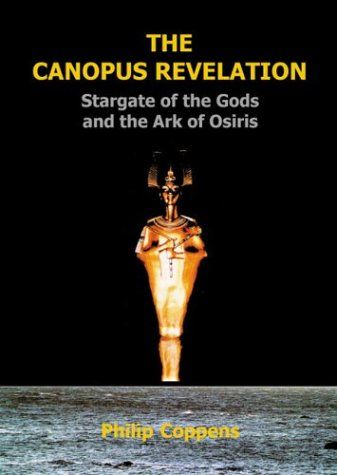
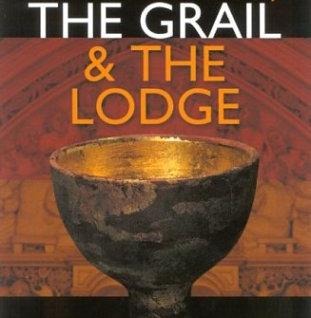
Quoting among others from Morals and Dogma by Albert Pike, The Canopus Revelation contains many more historical and logical mistakes than Holy Blood Holy Grail. Early on in his book pictured above Coppens makes a mistaken claim that de Sède introduces Pierre Plantard, who is "merely" introduced as an alchemist, there is no mention of the Priory of Sion. The first is true but the second not. Many more errors are to be found in "The Grail & The Lodge" pictured above. In fact The Grail & The Lodge is more fictional the Dan Brown's The Da Vinci Code, even the publisher list's it as 'history' instead of a novel.
But yes all the books following in the footsteps of Holy Blood Holy Grail, also mention ‘alchemy’ in connection with the Masonic Rosicrucians. Hence the title of this introductiory lecture of The University of The DaVinci Code here in Salzburg.
I should mention that there is no central sourcebook in existence yet that presents the history of the esoteric-occult environment as I will present here. The website by the same name therefore is not only the first ‘University’ in the world (be it on-line) specifically dedicated to related topics, but also presents the most complete overview on the occult revival to date (2004), and is based entirely on academic source material, to optimize its accuracy.
In fact there were major obstacles to overcome and I won’t bore you by presenting a list with the few hundred inaccurate statements I even had to unravel in academic books while preparing this seminar.
Not to speak of the popular pseudo-historical books that followed in the wake of Holy Blood Holy Grail, or/and Goddess,Grail & the Lodge, Canopes, and Talisman, the mentioned three where I had advanced knowledge of their content.
To not leave you with a vacuum what I exactly mean just one of the many examples:
One of the few good books on the subject that I just mentioned, Susanne Ackerman Rose Cross over the Baltic (1998), bend on correcting major mistakes in the work of Frances A.Yates (example The Rosicrucian Enlightenment) also has a number of mistakes. So on p. 181, Akerman comes to one of a series of faulty conclusions by claiming a manuscript by the alchemist/antiquarian M. Maier as evidence for the emergence of the Gold und Rosenkreutz as a "two-tiered Hermetic society" embroiled in sixteenth century French inter-confessional disputes…
This clearly went back however to a opinion in a book from 1910 by a certain Reverend Craven who in reference to a "Leiden manuscript"by M. Maier claim made by John Yarker in his Arcane Schools (1909) as a mistake, and speculates Yarker must have misunderstood his German source and ‘Leiden’ should probably read ‘Leipzig’.
Thus the 'Rosicrucian' Leipzig manuscript myth has taken root in Freemasonic lore as evidenced by the work of Jean Bricaud, repeated in Naudon Les Origines de la Franc- Maconnerie. Le Metier et le Sacre (1991) the source of Akerman’s misjudgement in this case.
In fact the only possibility to clear this matter was by studying the original German source, and since there never was either such a Leipzig or Leiden manuscript, it also seemed therefore impotant to to also find the reason why a related claim was ever made to begin with.
Yarker's account of a `Leiden manuscript' in his Arcane Schools - which A.E.Waite already identified as a "tissue of inextricable reveries," - is based upon the testimony of Hans Heinrich von Ecker and Eckhoffen in his work of 1782, Der Rosenkreuzer in seiner Blosse (The Rosicrucian in his Nakedness). There the author, writing under the name of 'Magister Pianco', makes a disgruntled expose of the secrets of the "so-called True Freemasons, or Golden Rosicrucians of the Old System." Important in context of the ‘Priory of Sion" invention, the Gold- and Rosenkreutz was a Freemasonic offshoot, combining Masonic initiatory grades with alchemical lore and practice. Having been expelled from this group a year prior to his book's publication, and having founded his own rival grouping known as the `Asiatic Brethren', von Ecker and Eckhoffen attempts to portray the `Golden Rosicrucians' as puppets of the Jesuits. In the course of his polemic he refers to the manuscript of Michael Maier of Rensburg, "one of the most notorious of the Rosicrucians," to be found at the library of the University of Leiden. In this supposed manuscript Maier is purported to describe the reformation of the Rosicrucian Order in 1510, by which the teachings of the Books of Moses and the Book of Revelations were brought into accord with the instructions of the "old Magi." As a sign of their reformation, the Brethren decided to rename themselves "Brethren of the Golden Rose Cross, True Freemasons, and True and Sincere Friends and Kindred of the Golden Rose Cross."
That this history is a fabrication, is not only evidenced by the
fact that there neither a Leiden or/and a Leipzig manuscript by Maier, but also
by the fact that the term "Gold and Rosy Cross" does not appear in
the literature until the second half of the seventeenth century, when it is
mentioned in certain Italian documents; as a denomination in Germany it is
fully established only with the appearance of Samuel Richter's Die Warhaffte
and vollkommene Bereitung des Philosophischen Steins (1710).
There
is no mention of a 'Gold and Rosy Cross' in the Rosicrucian apologetic works of
Fludd, as Akerman asserts on p. 181 of her 1998 book nor does the allusion to
"brothers of the Golden cross" made in the Aureum Seculum
Redivivum (1625) of Adrian von Mynsicht suggest the existence of "a
two-tiered Hermetic society" known as the Gold- and Rosenkreutz: whilst
the term was probably suggested to Mynsicht by the Rosicrucian Order's
appellation, he utilises fratres aureae crucis as an ornate but general
means of addressing those amongst his readers who are affiliated with him by
virtue of their alchemical proclivities.
Given this fact, the mention made by a certain mid-seventeenth century writer in Italy of "a company entitled the rosy cross, or as others say the golden cross" demonstrates the logic by which the `Gold- and Rosenkreutz' term first arose, i.e. from the conflation of tracts written under the aureae crucis and roseae crucis appellations.
In short, it appears that the `inextricable reverie' that has grown up around Maier's `Rosicrucian' Leipzig manuscript is an eighteenth century myth arising within the Gold und Rosenkreutz Freemasonic order, first `exposed' by 'Magister Pianco'. then associated via Yarker with the tale of a Agrippa von Netesheim secret society, and finally conveyed by Craven - as a `Leipzig' rather than a Leiden' manuscript.
Although Paul Arnold repeated the same ‘Leipzi’ myth in his Histoire des Rose-Croix et les Origines de la Franc-Maconnerie, he alsopointed out that it appears that the Gold- and Rosenkreutz of the late eighteenth century was determined to demonstrate its anteriority to the widely discredited Rosicrucianism of the manifestos.
Click
to part 2


For updates click homepage here
April 14, 2004